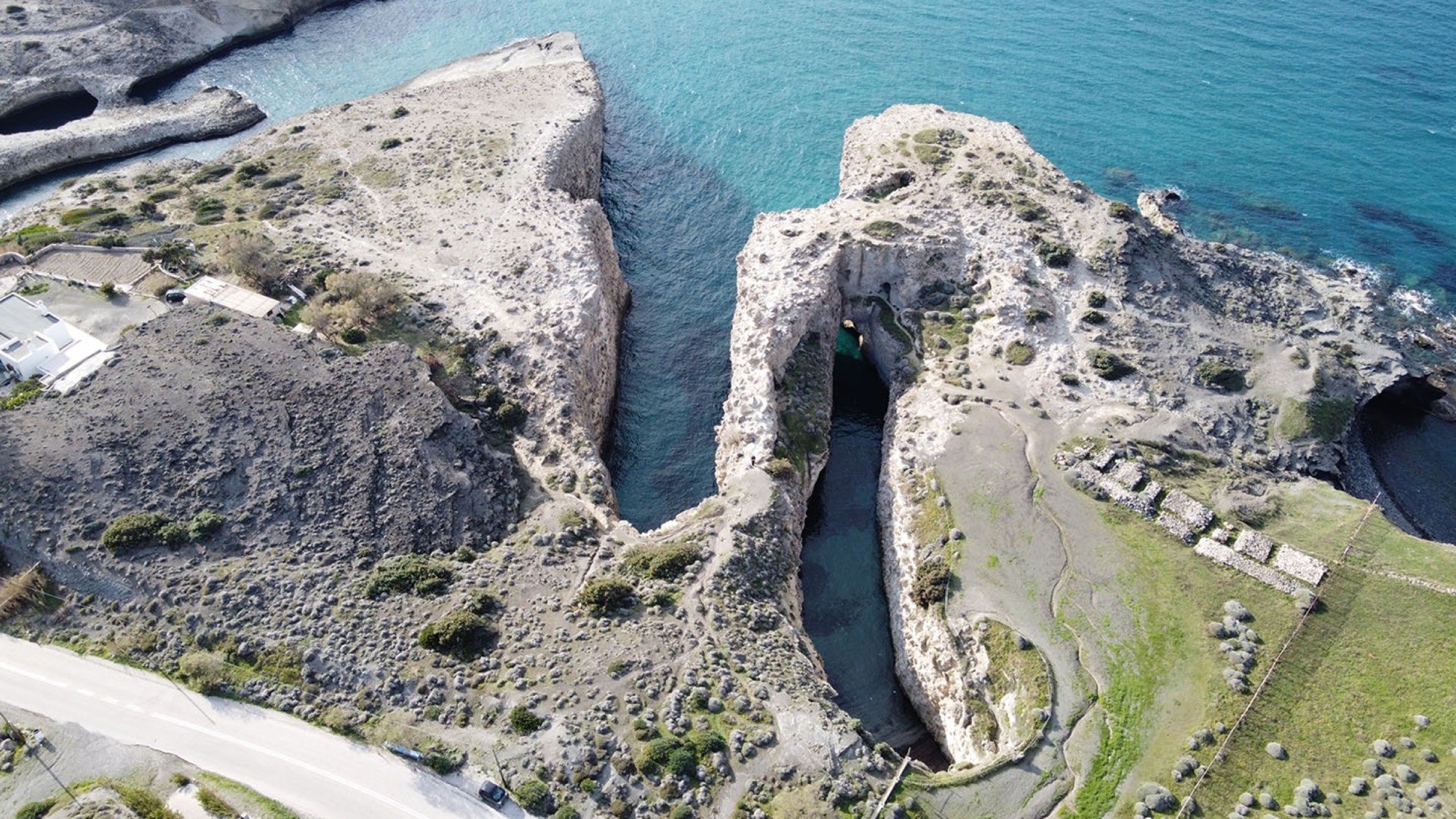
A deep sea cave between grey and white rock, beside a prehistoric site.
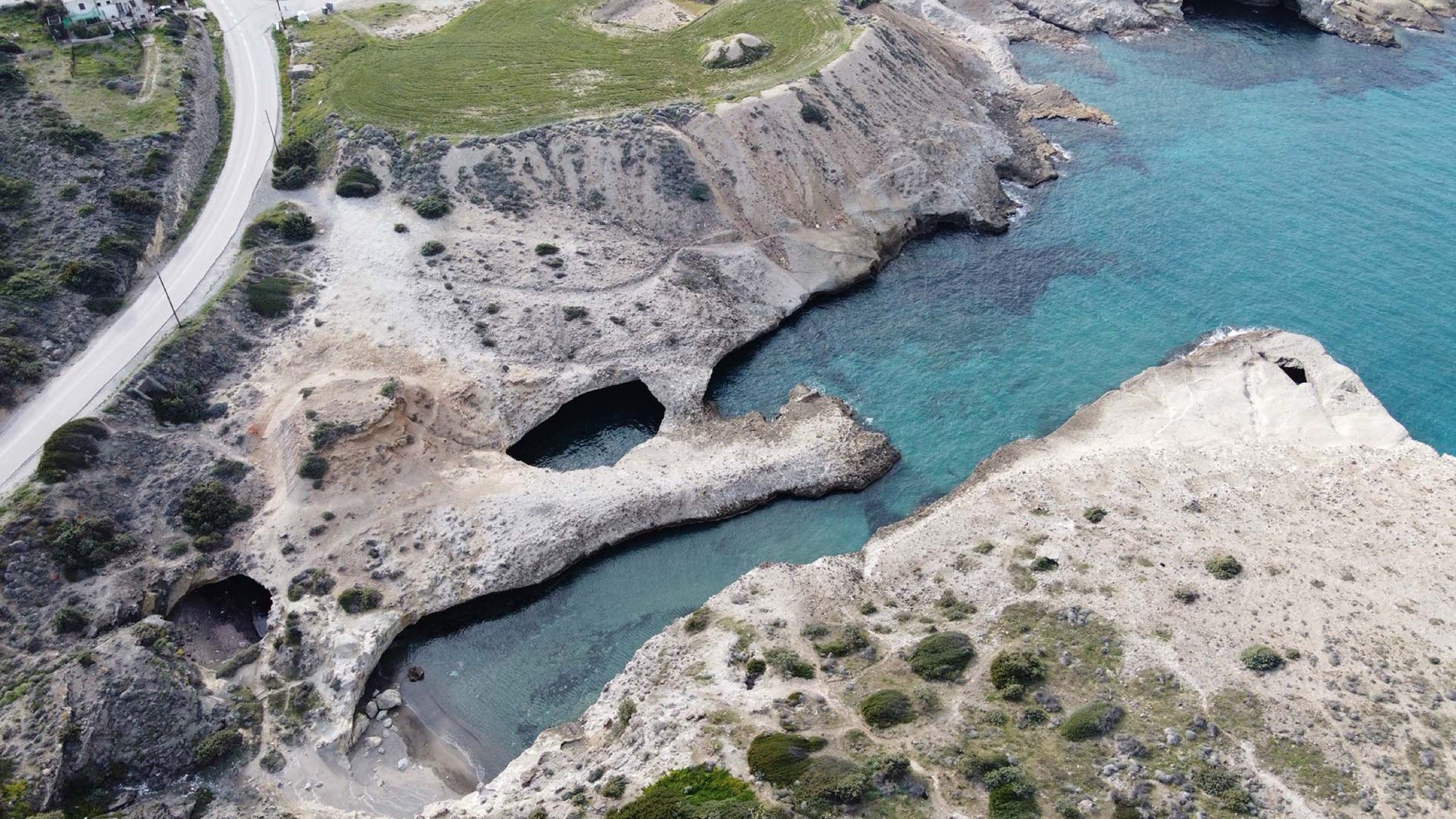
Papafragas cave is a narrow sea inlet in the cliffs of the north coast of Milos. A steep path carved into the rock leads down to a tiny beach, and the water runs out between the rocks to the open sea.
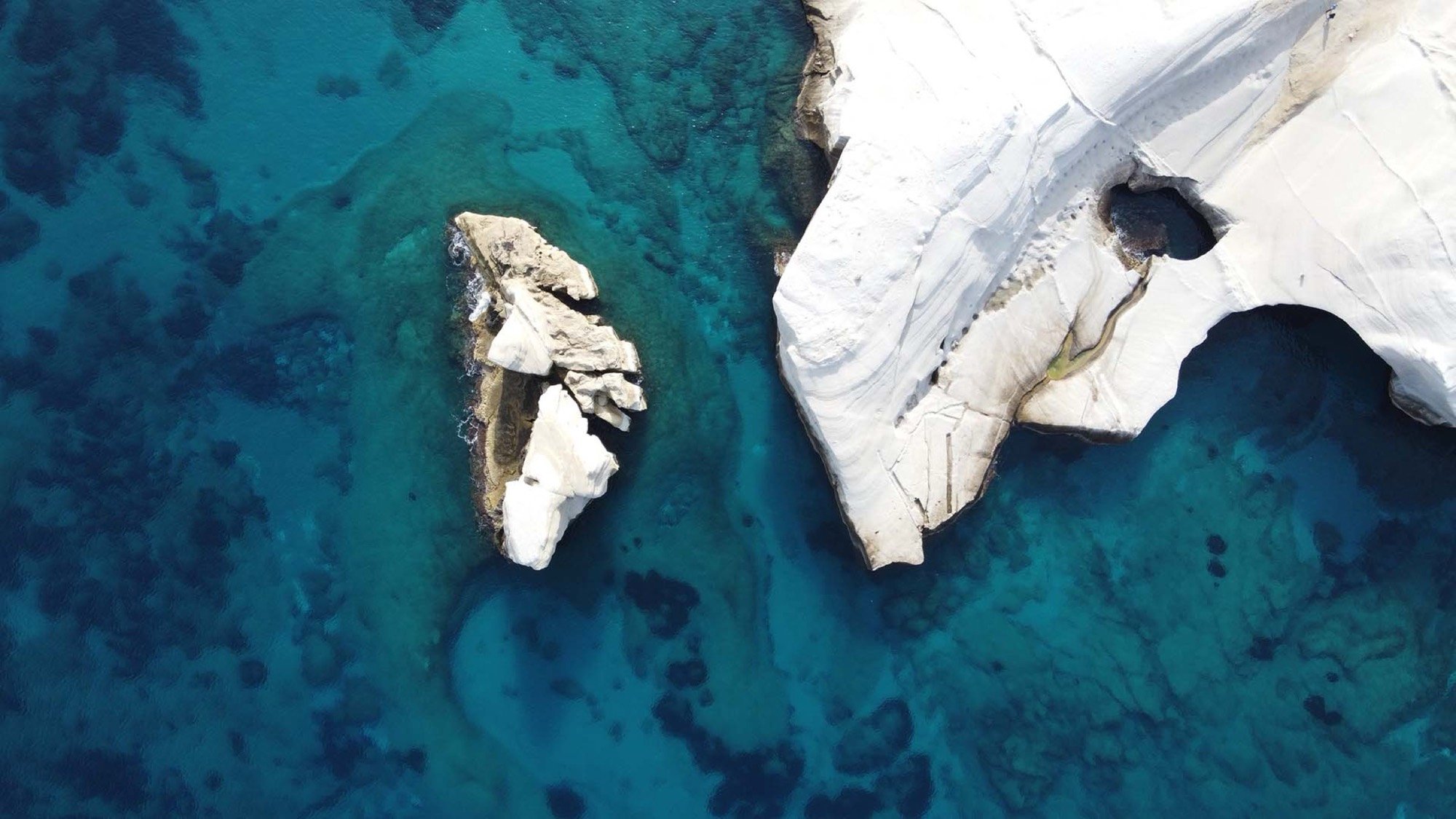
Papafragas beach, in the northern part of Milos, lies right next to the archaeological site of prehistoric Phylakopi. Nature has created a unique landscape of coves, openings and caves where the Aegean echoes. Papafragas cave is a deep sea cave where you can swim in turquoise water between grey and white rocks.
The beach and the water
There are three caves at Papafragas. The inlet is a deep cleft in the cliff, like a small fjord, and you swim in turquoise water between grey and white rock walls that lead out to the open sea. Papafragas beach at the end is small and surrounded by pale rock. In Byzantine times pirates used the cove as a base, and it took its name from the last Frankish priest, who kept his boat sheltered here.
Good to know
How to get there, how the wind affects the beach, and what to bring.
Getting there
By road, on the way from Adamas to Pollonia. From the roadside, steps cut into the rock lead down to a small beach at the end of the narrow inlet. The steps are narrow, so take your time and wear shoes with good grip.
Wind and timing
Papafragas is on the north coast, so it is best on calm days. With a strong north wind the waves run into the inlet.
Tips
There are no facilities. Right next to it is Phylakopi, one of the most important Bronze Age settlements in the Aegean. The Ministry of Culture currently lists the site as temporarily closed, so check before you plan a visit.
Best time to visit
Papafragas is small and very popular, so in July and August go early in the morning, before the path and the beach fill up. Because it is on the north coast, choose a calm day. With a strong north wind the waves run straight into the inlet and swimming becomes hard, and the meltemi is usually strongest in the afternoon.
Facilities
There are no facilities at all: no sunbeds, no umbrellas and no canteen. Bring water, food and something for shade, and take your rubbish back with you.
Frequently asked questions
Can you swim in Papafragas cave?
Yes, on calm days. You swim from the small beach along the narrow inlet, with the rock walls and caves around you. Avoid it when a strong north wind is blowing.
How do you get down to Papafragas beach?
By a steep, narrow way cut into the soft rock, starting from the road above. Take your time and wear shoes with good grip.
Where does the name Papafragas come from?
From the last Frankish priest, "papas" in Greek, who used the cove to shelter his boat.
What is Phylakopi?
A Bronze Age settlement right next to Papafragas, one of the most important in the Aegean. People lived there from the middle of the 3rd millennium BC to the 12th century BC, and the clay figure known as the Lady of Phylakopi was found in its sanctuary.